

From the many emperors and national heroes that hail from the Amhara ethnic group, only a few have been able to embody the spirit, resilience, and vision of the Amhara people as profoundly as Emperor Tewodros II. Born Kassa Hailu, he rose from humble beginnings to become one of Ethiopia’s most iconic and transformative leaders. His reign marked a turning point in Ethiopian history, as he sought to unify a fractured empire, modernize its institutions, and resist foreign encroachment. Tewodros II’s story is a testament to the enduring spirit of the Amhara people—a spirit characterized by courage, determination, and an unyielding sense of purpose. However in recent years many people have tried to rewrite the true origins of Tewodros claiming that he hails from Tigray and Qemant descendent. Not only will this claim be debunked but we will also prove that he is fully Amhara.
This claim has circulated on the basis of an undated “Ge’ez chronicle”, in which Tewodros’ father allegedly tells him that he is Tigrean and not Amhara. The conversation is said to be held between Tewodros and a man named “Gebre-medhin” who was a clothes washer in Tigray and allegedly his father.
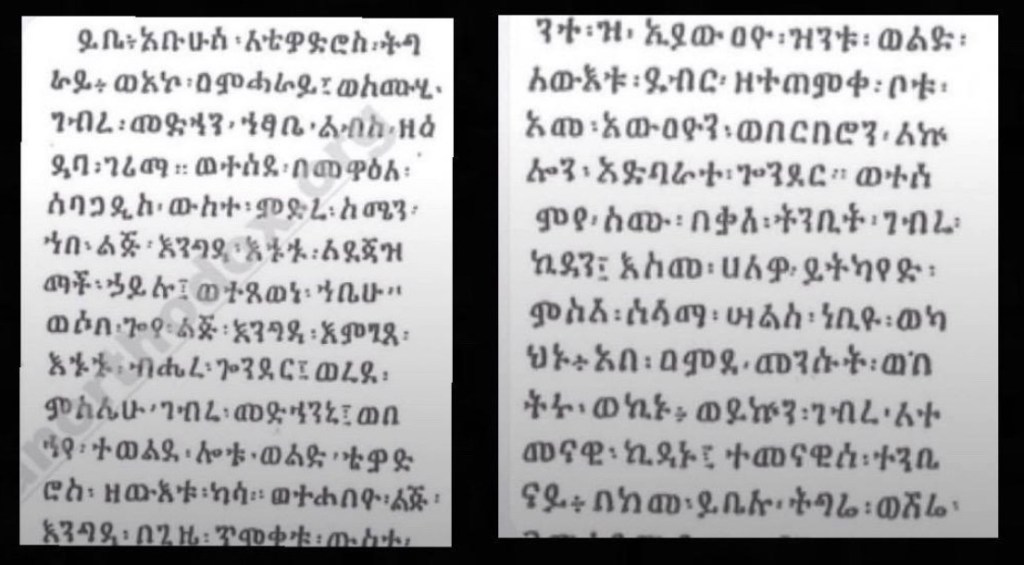
There are a number of problems with this so-called “Ge’ez chronicle”, let’s investigate:
a) First of all, no legitimate Ge’ez manuscript starts by saying “X is from this ethnic group, not that one”. This reveals that the document was written recently to support a particular narrative and doesn’t follow the proper literary style of an actual manuscript.
b) This entire document was written online and uploaded as a pdf to website called dirzon. No actual corresponding manuscript exists.
c) Analytically, the Ge’ez spelling of Amhara is አምሓራ, but the “manuscript” has ዐምሓራይ which is 100% Tigrinya, just like ትግራይ. So two languages have been mixed in this document.
d) We can’t even say it was a scan of an actual Ge’ez ብራና (manuscript), because it’s not even written on parchment paper.
e) Ge’ez for son would be ወልድ አው or ወልደ and should have appeared in the document. How can these activists tell us they are the kangz of Ge’ez and make this many blunders ?
f) They also spelled his brith name wrong, it’s ካሣ not ካሳ.
g) A Ge’ez manuscript should start by praising God and then stating the day or year it was written. It also ends abruptly, probably because they thought this short stuff would be enough to fool us.
h) If it is real, they should provide the name of the Ge’ez corpus it is found in, and where it originates from (monastery), because all such Ge’ez manuscripts that exist online were discovered by actual scholars, organized, and categorized.
Another major clue that this is a modern document is the inconsistency in spelling of ትግራይ (Tigray) and ትግሬ (Tigre).
Historically, the whole world knew both ethnic groups as the latter ትግሬ regardless of them being from Tigray proper or Eritrea region. The earliest mention of ትግሬ (correct spelling) is in a 14th century Amharic song for Amde Tsion.
But the so-called “Ge’ez manuscript” first uses ትግራይ which is a spelling popularized by TPLF and referring to both the Tigray “ethnic group” and region.

Hundreds of years later, in the 17th century, a Ge’ez hagiography of Abune Teklehaimanot uses the same spelling for ትግሬ, and what do you notice ? Amhara is spelt አምሐራ, slightly different from አምሓራ (which is most correct and preferred as it first appears in Amda Tsion’s poems), but VERY different from Tigrinya ዐምሓራይ … literally a mix of 3 different spellings in one so-called “manuscript”.

Irrespective of what that Ge’ez document says, the greatest proof of Tewodros’ identity comes from Hourmoudz Rassam, a Syrian visitor to Ethiopia during Tewordros’ reign.
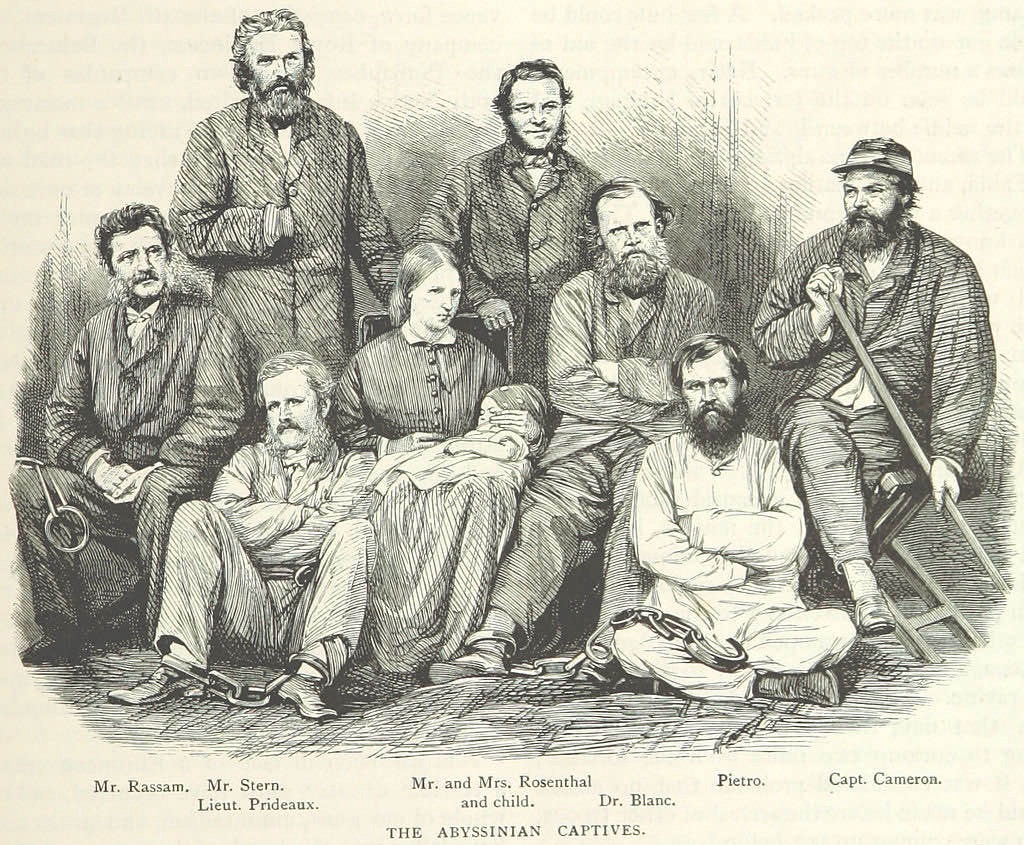
Rassam (far left) with the other captives of Tewodros II.
He arrived as an ambassador to resolve the diplomatic tensions between Ethiopia and Great Britain.
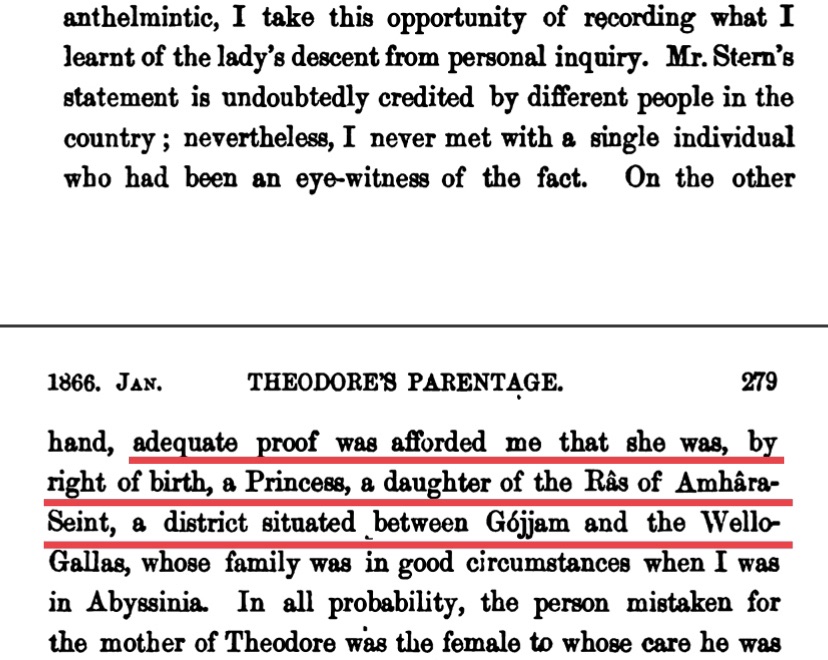
After careful investigation he writes the following concerning Tewodros’ mother. Clearly stating that she was an Amhara princess, daughter of the Ras of Amhara Sayint.1
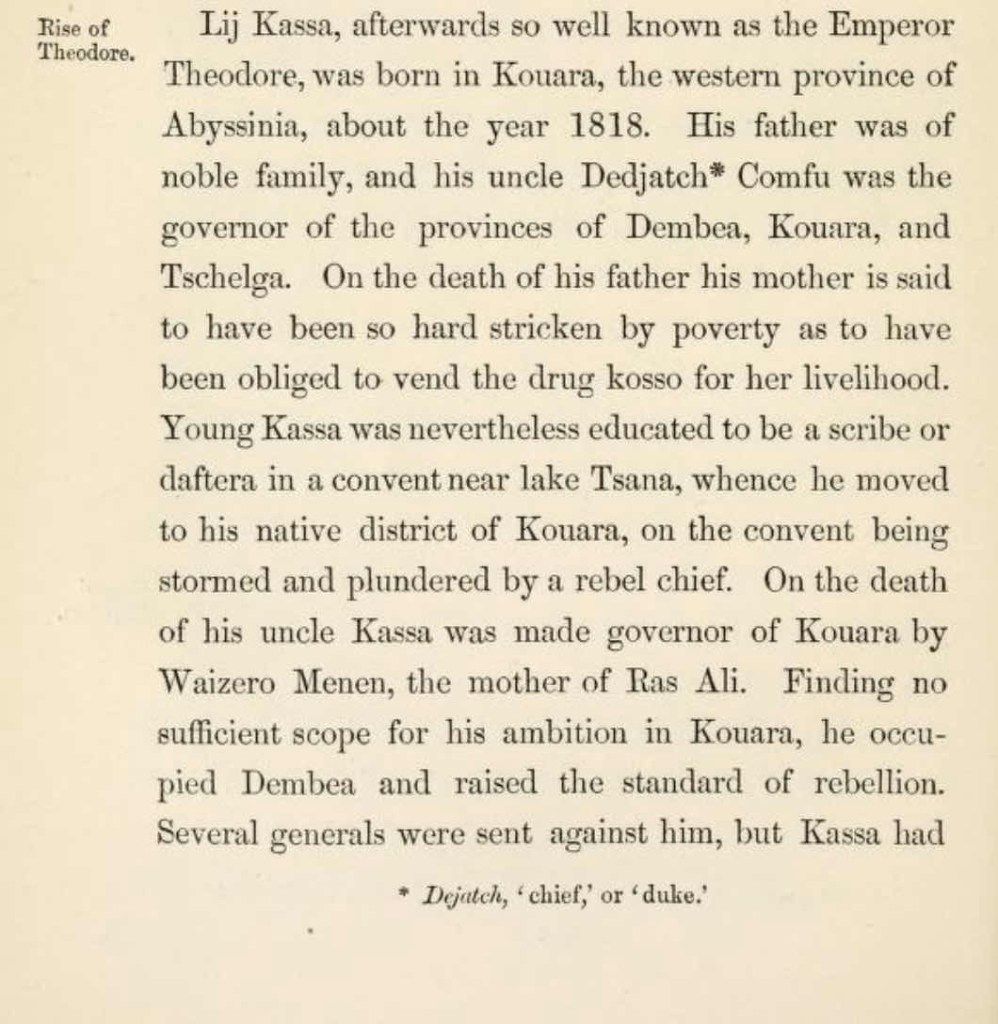
Captain Henry M. Hozier who was apart of the British military expedition to Abyssinia, states that Tewodros was born to a noble family and his uncle Dejaz Confu was the governor of the provinces of Dembea, Kouara, and Tschelga.2
Now, according to another primary source, Kassa’s (Tewodros’) father did in fact die when he was an infant. So how did he have an adult conversation with his father “gebre-medhin”, as the “manuscript” claimed ?
It also states that his father was in fact Dejaz Haile Mariam, not a clothes washer called Gebre-Medhin.3
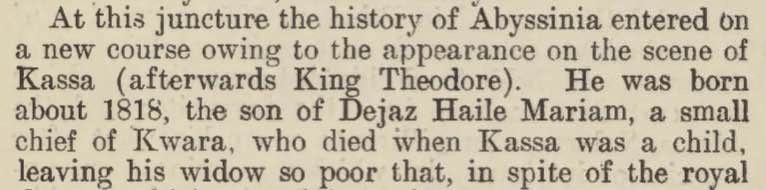
In addition to explaining that Kassa repeatedly defeated several Egyptian incursions, the same primary source states Dejaz. Kinfu was his uncle while others say that he was his father. Whatever the case, it’s clear he comes from an Amhara family in Qwara.
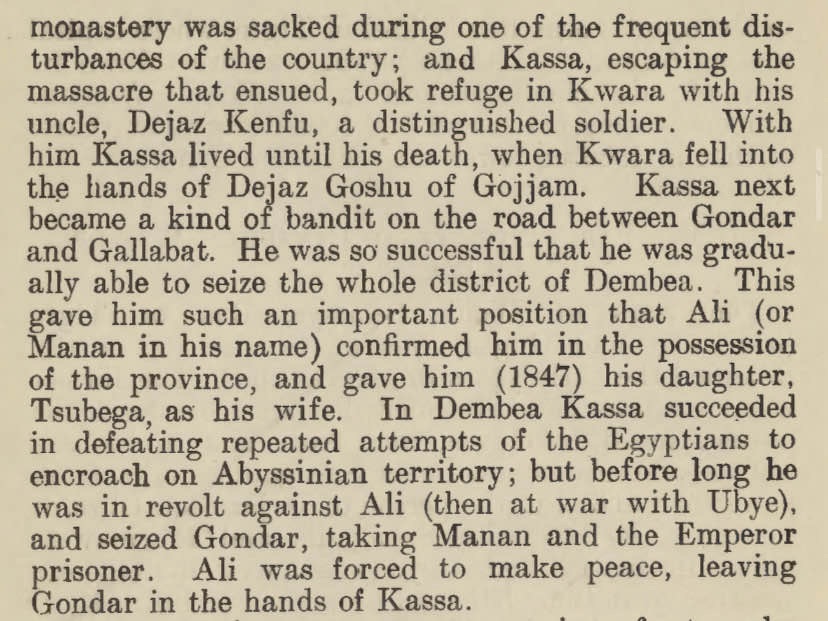
Unlike the previous primary source, Rassam is confident that Kinfu was not his uncle but rather his father.

He states that Tewodros affirmed Kinfu to be his father from whom he inherited the Amhara country.
Rassam also investigated the matter further by interviewing the childhood friends and relatives of Tewodros. They all unanimously affirmed Dejaz. Kinfu as his father, effectively debunking the obscure claim of Gebre-medhin being his father.
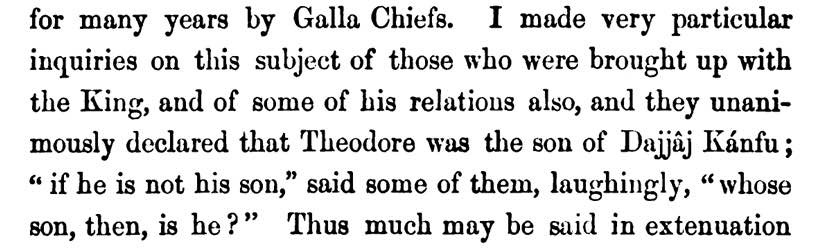
Finally, even if Dejaz.Kinfu had been his uncle, that would mean that the only realistic candidate to be his father would have been Dejaz.Haile Mariam who was also an Amhara anyway.
Now that we have dealt with the claim of Tewodros’ father being Tigrayan, let’s address the claim of his mother being Qimant. We already demonstrated that his mother was an Amhara from Sayint using the results of a primary investigation.
So where then did the claim of her Qimant ancestry arise ?
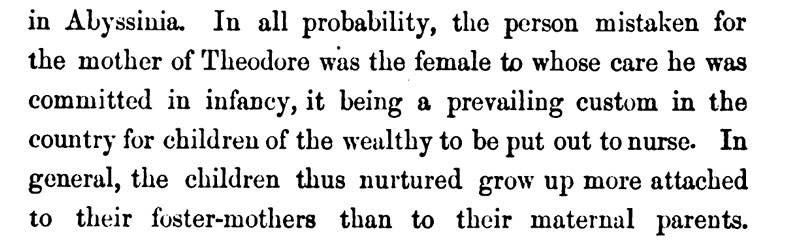
It was most likely from the fact that Tewodros was raised by a household maid of Qimant heritage. This is well explained by the first hand investigation of Rassam.
Burke’s “Royal Families of the World”, claims Tewodros is the son of Dejaz Hailu Wolde-Giyorgis, the governor of Qwara. With Dejaz. Kinfu Hailu being his brother rather than uncle or father.This still shows that he is blood related to the Amhara Qwaran ruling dynasty and not the son of Gebre-medhin.4

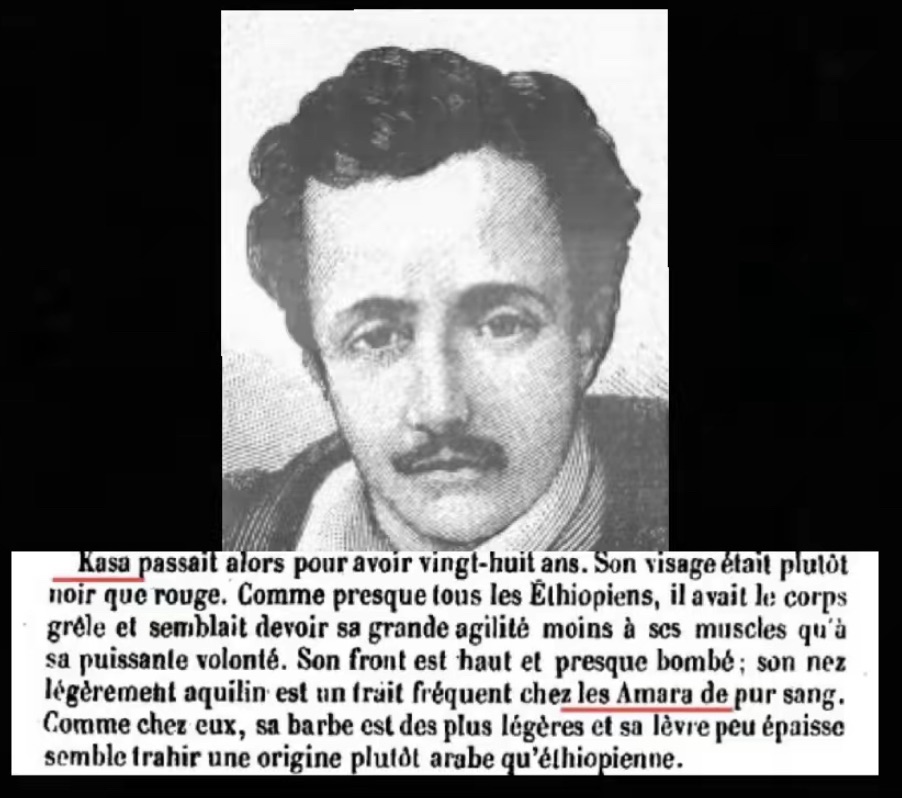
Another primary account which provides a description of Tewodros was written by the French explorer Antoine Thomson D’Abbadie who visited Ethiopia.
He states that Tewodros aquiline nose was an ordinary trait among pure Amharas. Revealing that he believed Tewodros to have the same features as his Amhara brethren.
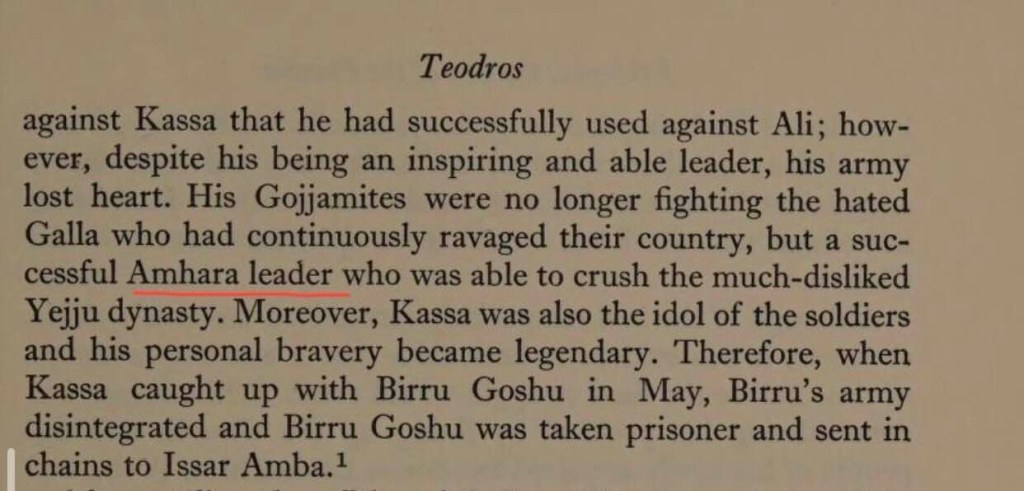
Multiple secondary sources also back this claim up on top of the primary sources that prove Tewodros’ Amhara heritage. A secondary source produced by Donald Levine titled “Greater Ethiopia” identifies Tewodros as Amhara. Despite making many historical errors, even Donald got this right.5
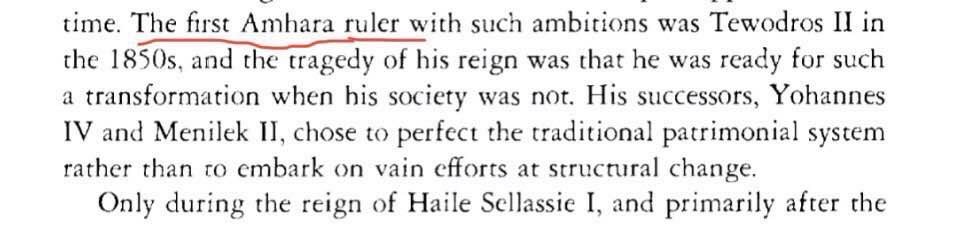
Another secondary source produced by Mordercai Abir and titled “Ethiopia” Era of the Princes”, corroborates.6
A third secondary source produced by James Minahan and titled “Nations without States, A Historical Dictionary of Contemporary National Movements” corroborates again.7

Now that we have shown both primary and secondary sources to prove Tewodros true heritage let us end off by examining Tewodros’ official chronicles.
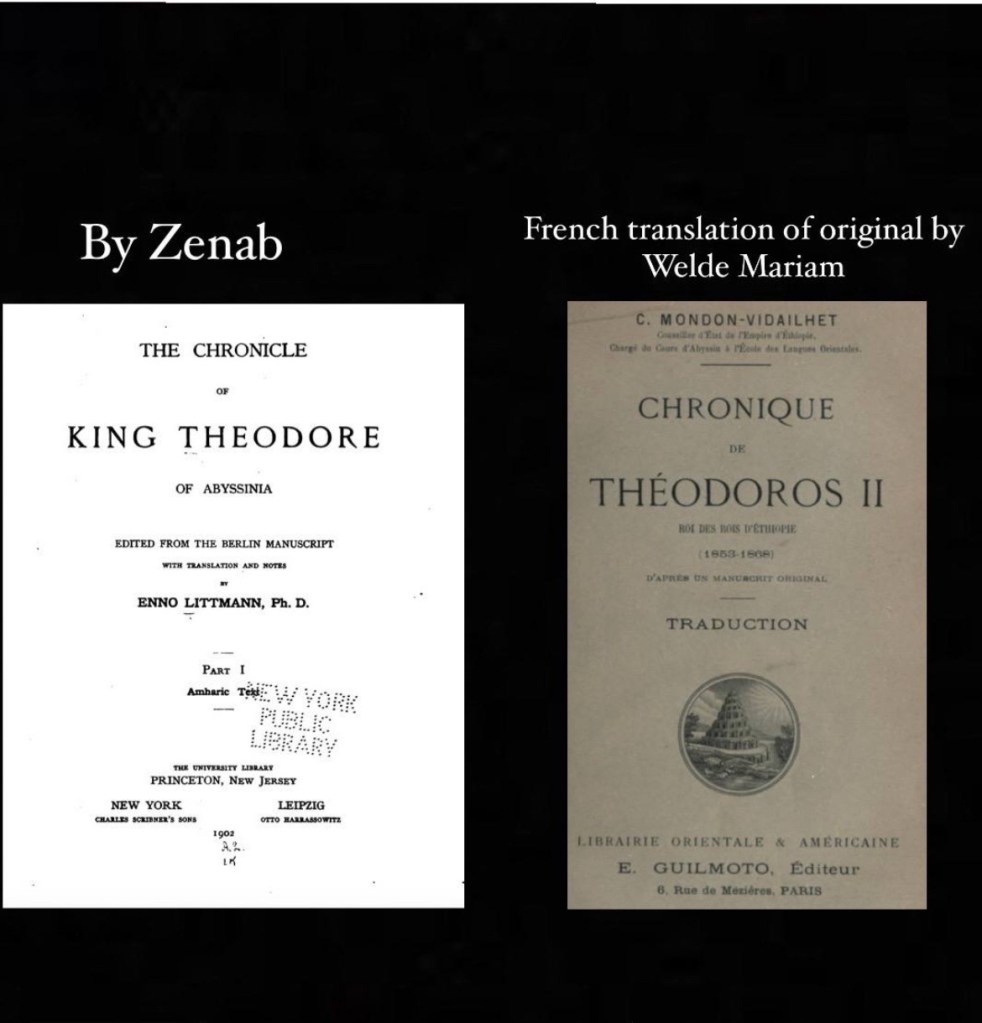
Tewodros only has 2 official chronicles, and both are in Amharic.The first was by Aleqa Zenab from Gondar. The second is by Aleqa Welde Mariam from Shewa. Both were written during his reign, though the second contains some posthumous notes on the emperor.
Additional research and commentaries by Ethiopian scholar Paulos Gnogno in 20th century
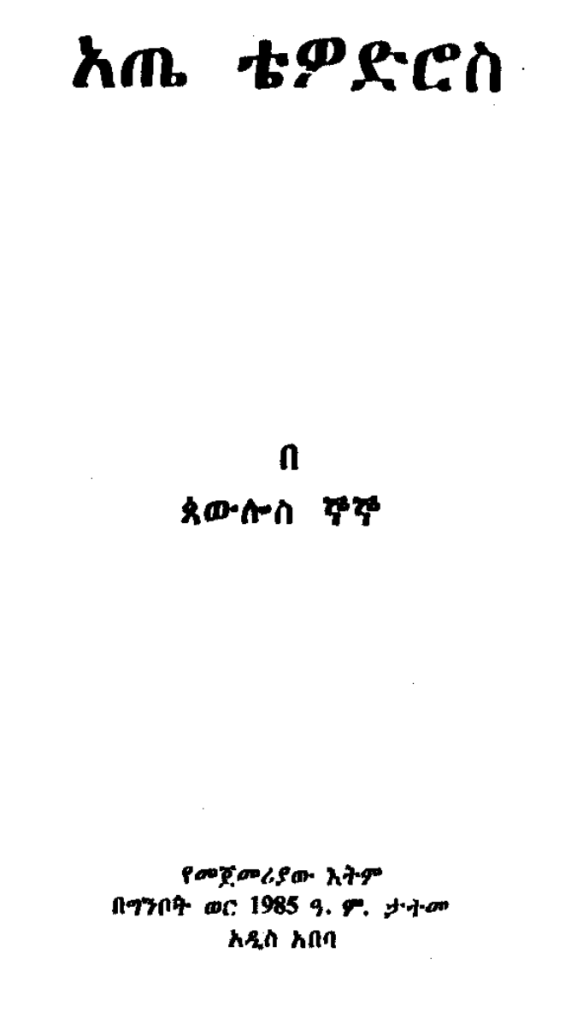
Tewodros was born Kassa Hailu.
DAD: Hailu Weldegiorgis. He was a hereditary noble from Qwara in Gondar.
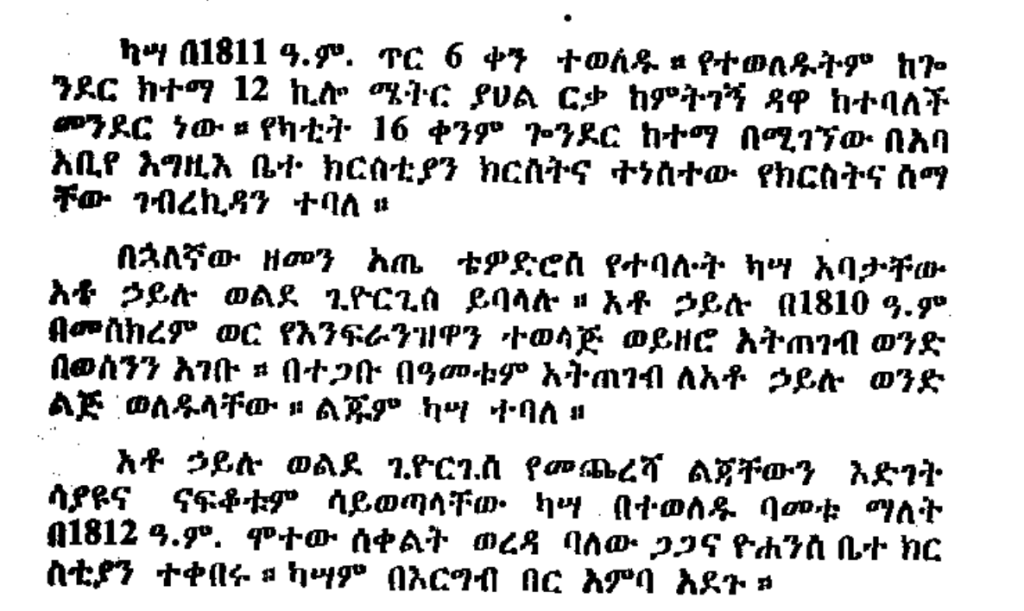
MOM: Attegeb Wendbewessen (Amharic). She was from small village in Gondar called Enfraz. Her father was also Ras named Wedajo Wend BeWessen. He married an Enfraz noblewoman named Weyzero Teshalen (Also Amharic)

Above are from Gnogno’s research. And those before him like Gerima Tafere in his book አባ ታጠቅ ካሣ የቋራው አንበሳ.
In summary of these sources together:
- Tewodros’ father died when tewodros was 1 and tewodros continued to live with his mother….
- Later on she sent him to live with relative Dejazmach kenfu hailu (NOT Tewodros’ father; rather, his uncle or half brother)
- Relative wanted his own sons to inherit his wealth, but was it was prophesied by monks that Tewodros would get everything. This made Kenfu jealous and threaten Tewodros, so his mother moved him to a monastery
- the gedam was ravaged by Ras Yemam, who wanted to target Dejazmach Maru…. Yemam harmed everyone in the monastery except tewodros….
- Shortly After that Dejazmach kenfu died, and his two sons Yilma and Mekonnen started fighting each other in a place called Zengi ……
- Mekonnen won the battle over his brother Yilma, and since young Tewodros supported Yilma, he was captured along with Yilma… however he was also spared from any harm by Mekonnen and released for free
- Tewodros joined forces with Yilma and Mekonnen to fight the ruler of Gojjam back then named Biru Goshu
- Tewodros and co lost the battle.. so tewodros went on in hiding for about a month, before helping Dejazmach Goshu fight his own son Biru Goshu…. Together they won the battle and Tewodros was rewarded for his support
- He continued to lead a life of jegnenet until he deposed emperor Yohannes III and was crowned the new emperor
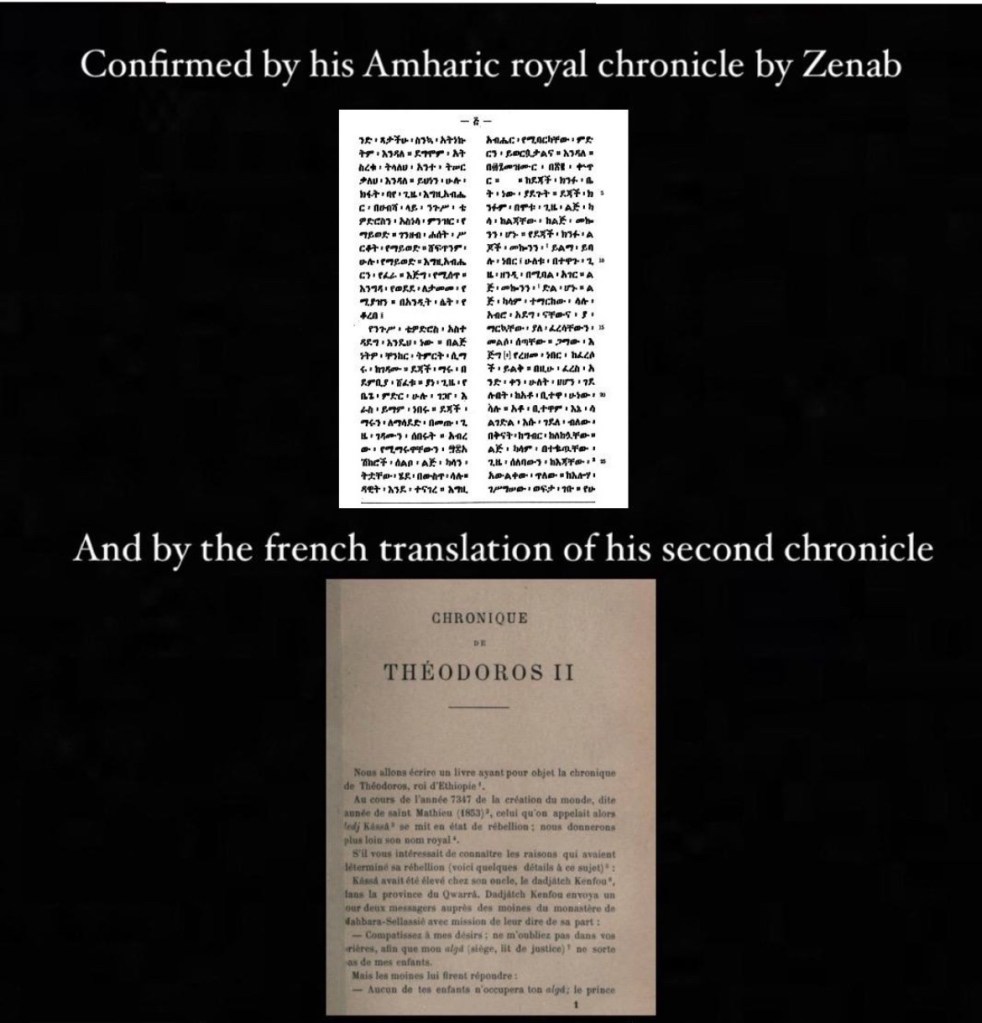
This is confirmed by his Amharic royal chronicle by Zenab and by the french translation of his second chronicle.
Based on the information I have presented this is the (paternal line) of Tewodros:

The proof provided here serves a two fold purpose which is that it debunks the lousy attempt to try and claim one of the most important Amhara figures and it also serves the purpose of educating Amharas. This is just one of the many examples in recent decades of Oromo,Tigrayen and even in some cases Eritrean nationalists rewriting Amhara and Ethiopian history for political and historical reasons.
In this case this historical revisionism stems from the insecurity of the Tigrayen ethnic group over the fact that they have one king who was the exact opposite of Tewodros. The Tigrayen king, Yohaness IV had Amhara and Agew heritage(a topic for another time) but besides that he was also a traitor to the country allying with the same people who would lead to the demise of Tewodros, the British. This is just one of the many reasons as to why tigrayens would go as far as to make fake Ge’ez documents to claim him.
At Amhara Archive we aim to debunk false narratives like this and educate the wider Amhara community so they understand their history and heritage fully.
- Narrative of the British mission to Theodore,king of Abyssinia;1869 ↩︎
- The British Expedetion to Abyssinia: compiled from authenthic documents;1869 ↩︎
- Abyssinia by G.W. Prothero; 1920 ↩︎
- Burke’s “Royal Families of the World” VOL 2 ;1977 ↩︎
- Greater Ethiopia;2000 ↩︎
- Ethiopia, the era of the princes;1968 ↩︎
- Nations without states : a historical dictionary of contemporary national movements;1996 ↩︎
 Amhara Archive