
Ashenda is a festival celebrated throughout the Amhara region and recently adopted throughout Ethiopia, a trend often seen within the country.
Ashenda is usually celebrated from August 16-21 (the dates may change slightly) which honors the assumption of Virgin Mary. The festival is celebrated after a 2 week fasting period.
One of the ethnic groups who have adopted Ashenda are “Tigrayans”. Rather than being appreciative and giving respect to Amharas for introducing this culture to them they have spent the last 3 decades rewriting history and creating relentless propaganda to discredit Amharas of their own culture.
Many Ethiopian ethnic groups claim to be the originators of the Ashenda Festival, only the Amhara people can support their claims to it using concrete historical evidence, as recorded by domestic & foreign primary sources.This article will debunk their failed propaganda while also providing evidence to back our claims.
Ashenda is an Amharic word,not Tigrinya. The first written mention of “Ashenda” is found in an Amharic book from 1910, authored by Tigrayan & German scholars.
They agreed Ashenda is originally an Amhara festival.
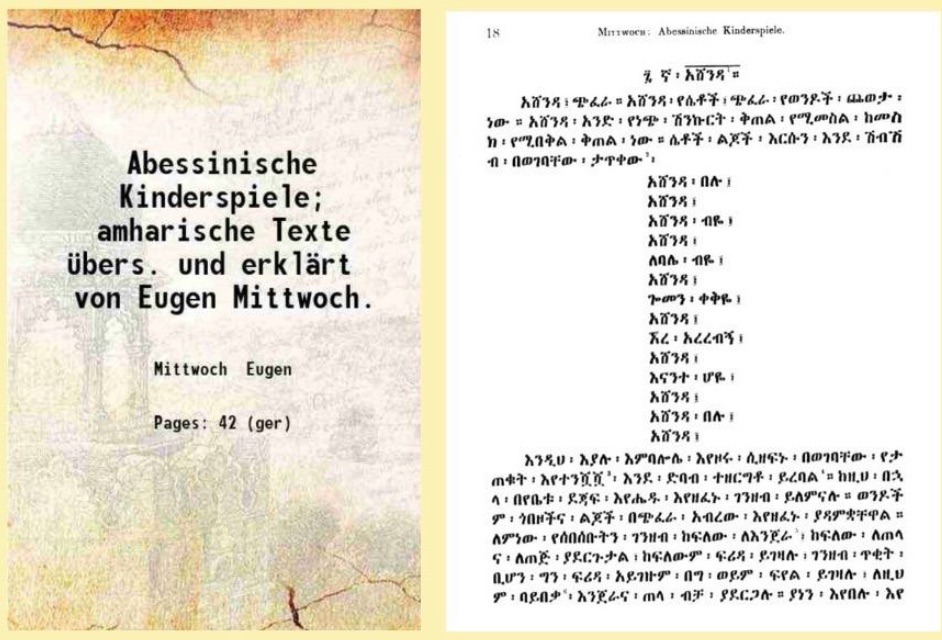
The book has a Amharic song about Ashenda trom 19I0. The authors explain that Ashenda is an Amharic word, which has 3 distinct but interrelated meanings.
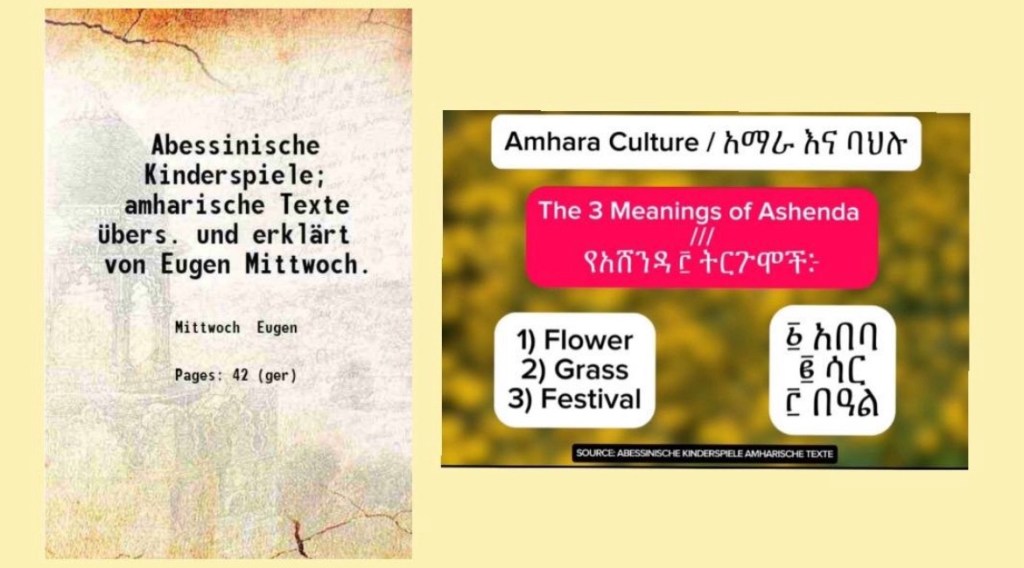
The first refers to a flower called “Ashenda,” exchanged between Amharas during the celebration.
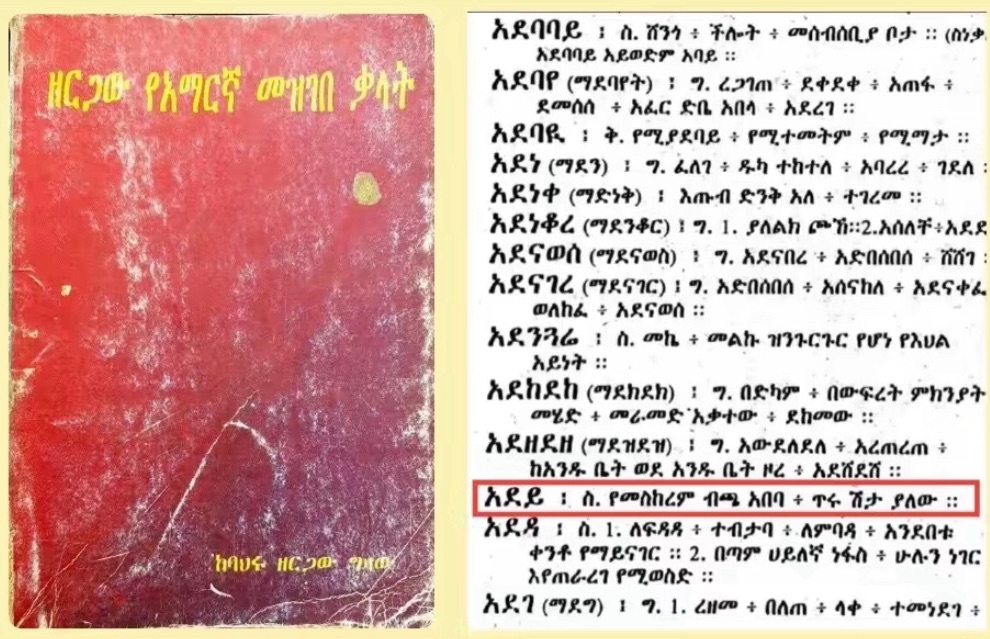
In certain parts of Amhara, like Gondar, Ashenda is called “Shadey” /ሻደይ, reflecting the Amharic name for the seasonal flower, “Adey” / አደይ, which blossoms in late August.
A video of a Tourist in the Amhara region celebrating Ashendiye, it goes over everything we have explained so far including that Ashendiye comes from the Amharic word, Ashenda that describes the tall grass that grows in the Amhara region.
The Ashenda celebrations are everywhere in Amhara under different names.
Below is a photo from 1921 of Amharas celebrating Ashenda.
The original caption reads “Rito del Beghemeder,” meaning “Rite of Begemeder.”
“Rite” is another term for religious ceremony and Begemeder is the historical name for Gondar, a province in the greater Amhara region.

Amharas from Gondar celebrating Ashenda.
In Angot (Raya) , Amhara it is called Solel.
Solel (also known by Ashendiye and Shadey in other areas of Amhara Region) is celebrated every year around Nehase 16 and 17 (August 21st/22nd) after the end of the Filseta tsom (fasting).
In some parts of the Amhara region the festival is called Shadey/ሻደይ
Elsewhere, like in Gojjam, locals combine the Amharic terms “Adey” / አደይ and Ashenda / አሸንዳ to form “Ashendiye,” spelt አሸንድዬ or አሸንድየ. One may also hear “Ashenday” / አሸንዳይ or አሸንዳየ. Another name for Ashenda is “Engicha Nekela” in Gojjam.
All are closely related, differing mainly due to dialect.
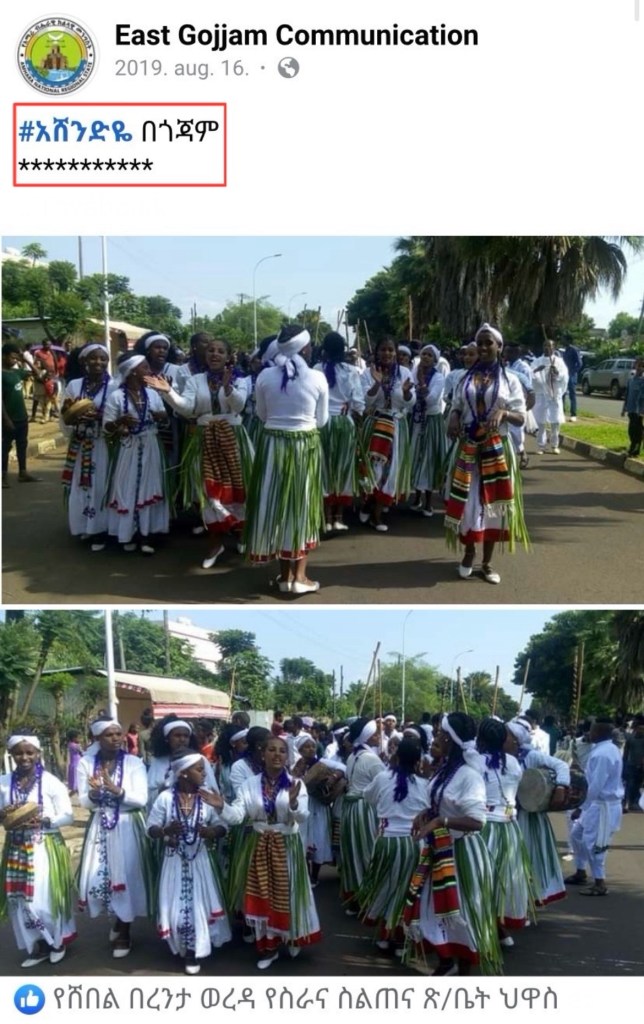
Engicha Nekela (Ashenda) celebration in Gojjam.
Even Gurages, another tribe, celebrate Ashenda. The Kistane know it as ኩርፍወ / “Kurfwe” while the Sebat Bet call it ነቆ/ነኧ “Neqo/Ne-e.” Some also call it እረቐ or ኧረቐ / “Ereqe.”
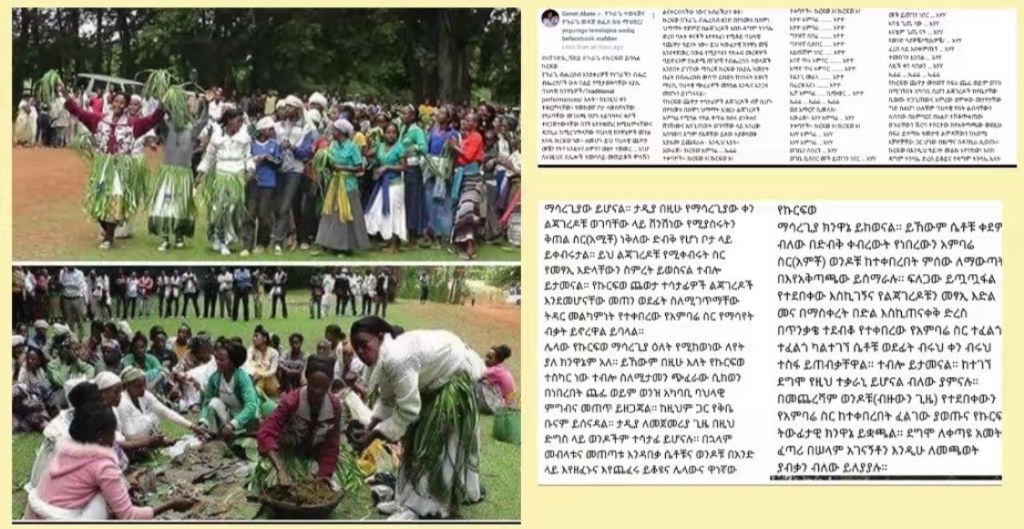
Second, Ashenda describes long strands of grass that Amhara women & girls traditionally attach to their clothes during festivities. This is done to commemorate Virgin Mary, who ascended to Heaven from a field of tall grass.

Now that we have proven the meaning of Ashenda and its ties to the Amhara community let’s debunk the notion that it was originally started by “Tigrayans”.
Tigrayans are only aware of Ashenda today because the TPLF politicized & appropriated it from Amharas.
For most of their history until recently Tigrayens celebrated a pagan festival called “Ayni Wari”. Most of the “vintage” photos and videos of Ashenda from Tigray is faked but we will get to that.
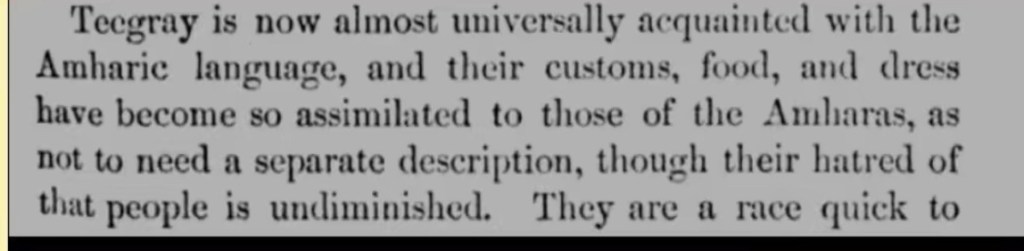
“Tigrayens” like to pretend Amharas are not the original however many sources attest to their poor imitation of Amhara identity & culture.
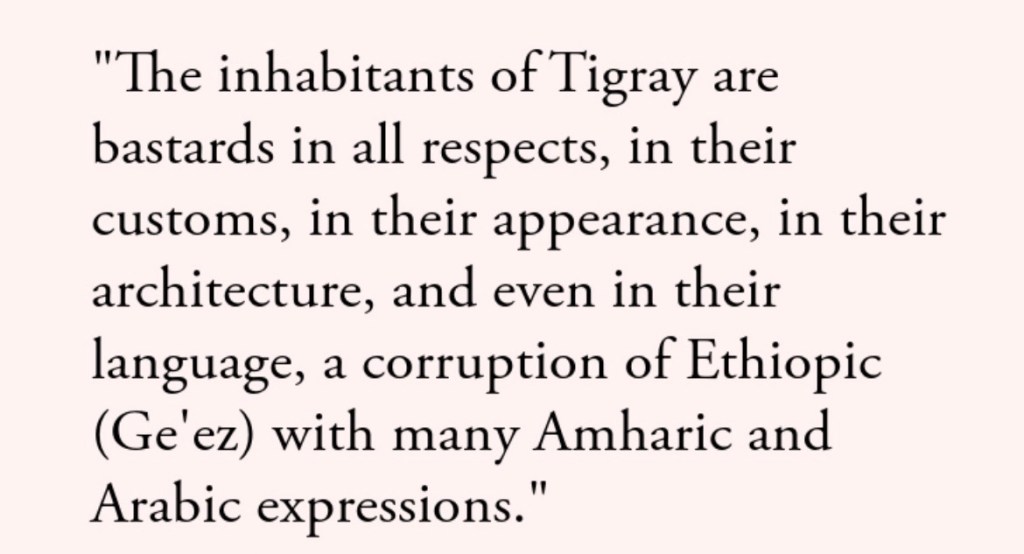
pp. 313-314
Here’s what the British diplomat, Walter Plowden said about Tigray and their immitation of Amhara culture in the 1850S:
Ashenda is foreign to Tigrayans, we can consult the earliest Tigrinya dictionary in existence, printed in 1903. THERE is no mention of Ashenda anywhere.

Enno Littmann, whose team visited Tigray in 1905 & studied every aspect of “Tigrayan” culture. Yet, in their 1,000+ page publication, they did not mention Ashenda or anything Ashenda-related. Not even once.
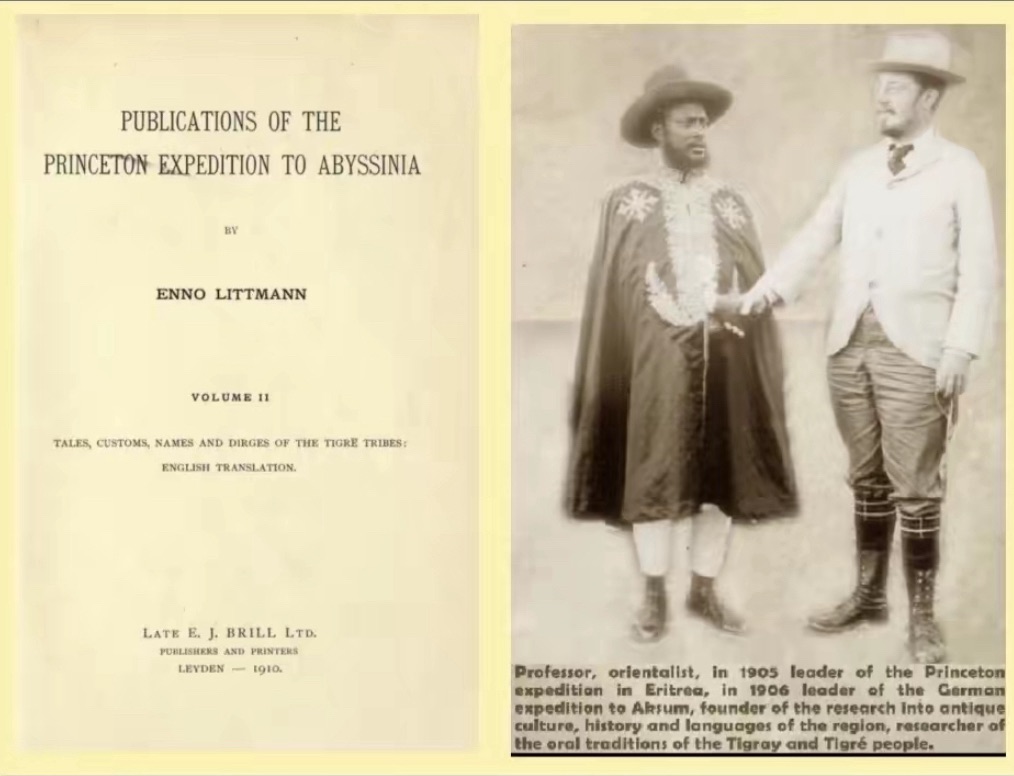
On the contrary, Littmann did mention-dozens of times— that “Tigrayans”believed in demons, serpents, & other unorthodox creatures.

Before they rebranded their pagan festival as Asehnda to discredit Amharas, Tigrayans traditionally celebrated something called “Ayni Wari” / ዓይኒ ዋሪ, literally meaning “Eye of the Blackbird” in Tigrinya.

Even UNESCO documented that the people in Tigray copied the name Ashenda from us when the original name for thier celebration is Aynewari.
According to UNESCO:
Therefore, the festival is known as “Ashendeye” in the Amhara Regional State in Lasta, Lalibela and Gondar, “Engicha Nekela” in Gojam and “Solel” in Wollo Raya and Kobo districts.
Among the Agew of Waghemra, it is known as “Shadey”. In Tigray Region, there are different ways of naming the festival across various localities such as Ashenda, Mariya, Ayni-Wari.

“Tigrayans” don’t even call it Ashenda in Tigray. The Agew provinces in Tigray (Enderta and Tembein) call it Ashenda.
The name Ayinwari is the true name of the celebrations in the Tigray region before they stole the Ashenda name from Amharas.
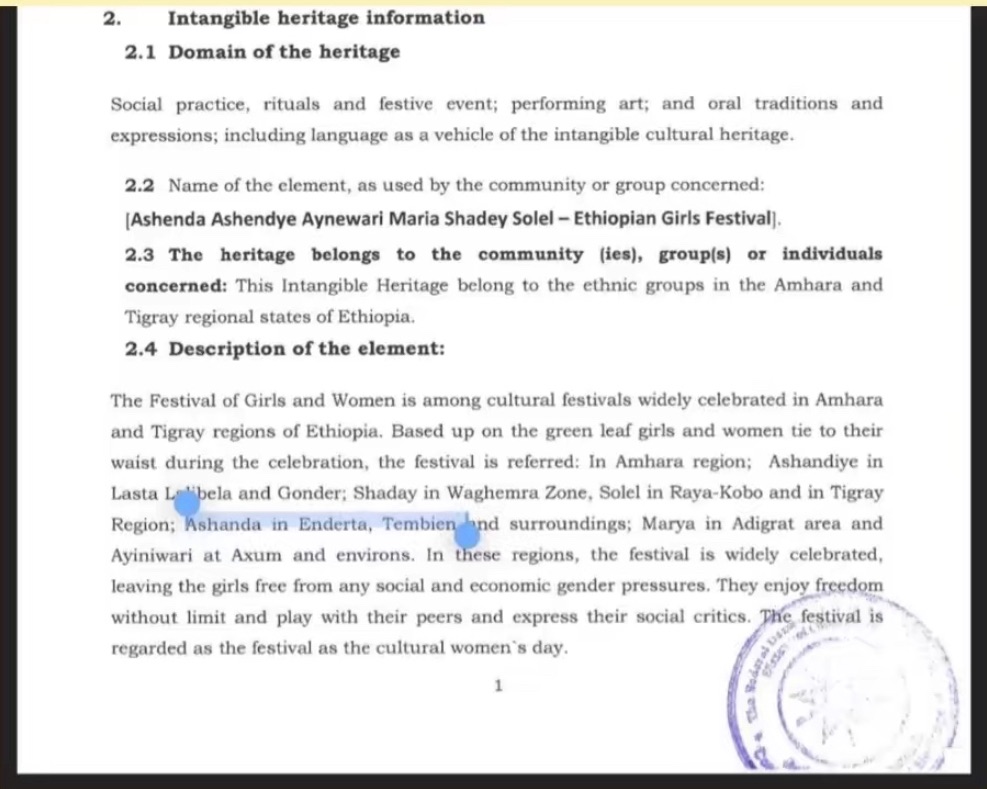
The UNESCO document shows the names and dates of the celebrations.
Notice the Ayni Wari name but no Ashenda name.
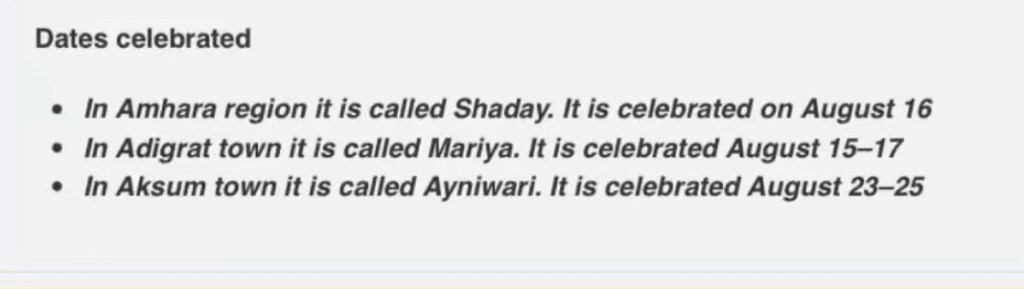
Now that we have established that Amharas were the ones to introduce Tigrayans to Ashenda let’s compare how different the celebrations are.
Most of Ashenda is reserved as only a religous celebration to the Amhara and Agew communities. However in Tigrayen culture, there is little to do with religon and it is more of a social event. Let’s look at some of the cultural differences between Amhara Ashenda and Tigrayen Ayni Wari.
During Ayni Wari, Tigrayans pray to pagan gods to grant them fertility & earthly riches. They also curse their enemies in the name of their false gods. They do this using a young girl, no older than 12, who acts as an intermediary between the living & the dead.

More proof of the un-Christian nature of Tigray’s Ayni Wari comes from Tigrayan folklore.Whereas for Amharas, Virgin Mary is the focus of Ashenda, for Tigrayans, it’s all about money & sex.

Tigrayans always tell their brothers & sons to “never marry an Ashenda girl” from Tigray:
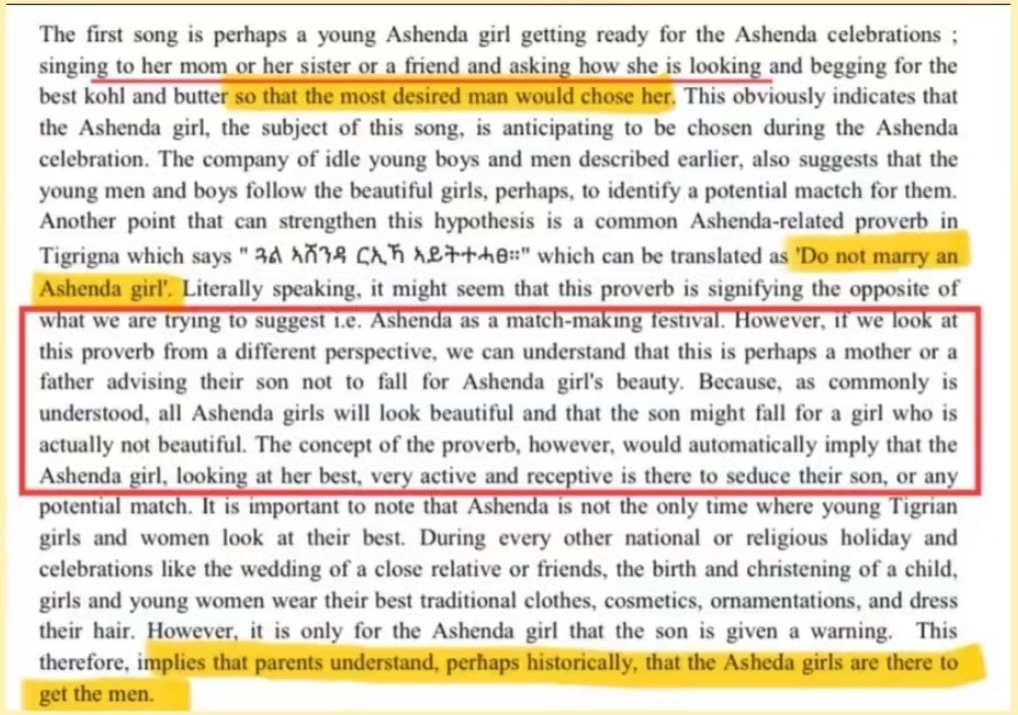
The situation is so bad that Tigrayan elders call their own daughters gold-diggers, as these girls insult & ridicule anyone who does not give them money during Ayni Wari.
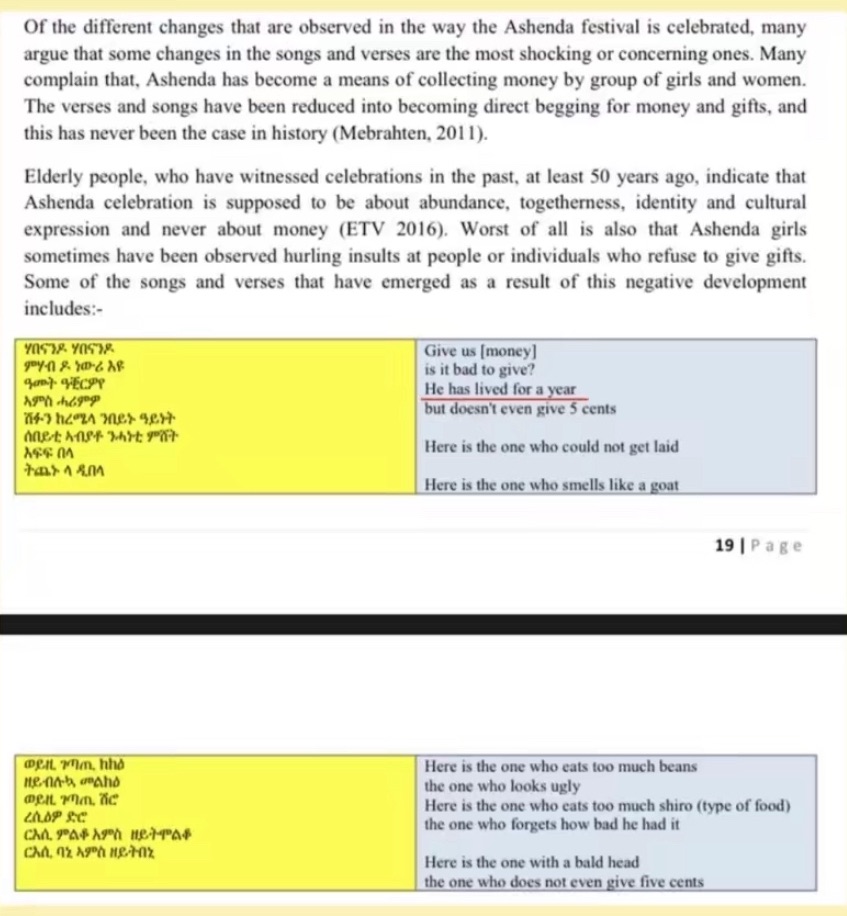
The degenerate behavior has lead to consequences, such as rising HIV cases.

The Tigray regional government has also invested millions of Birr each year to promote safe Sex during Ayni Wari in Tigray.
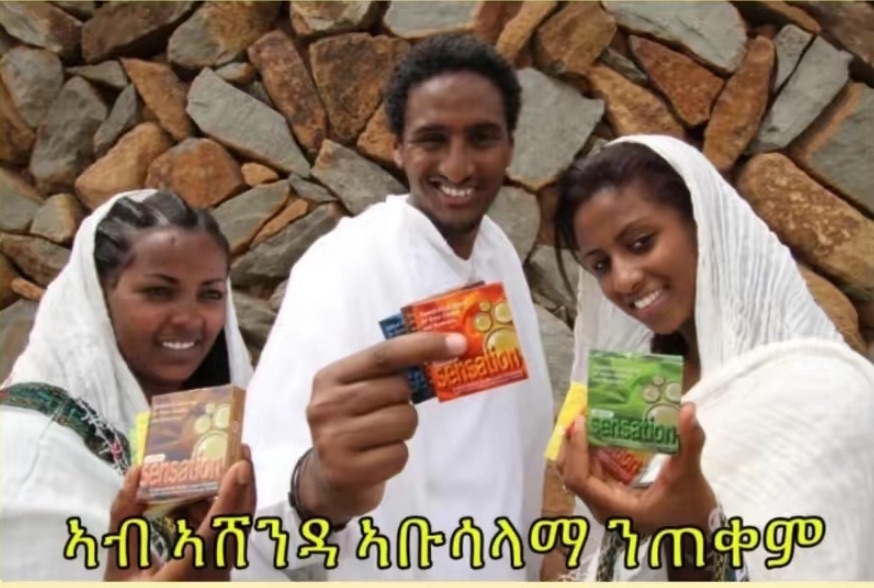
All of this is confirmed by Tigrayan researchers themselves, who studied the history of Ashenda based on oral traditions in Tigray & concluded that the Ayni Wari festival, as it is known in Tigray, not only has a pagan origin but retains its anti-Christian elements.
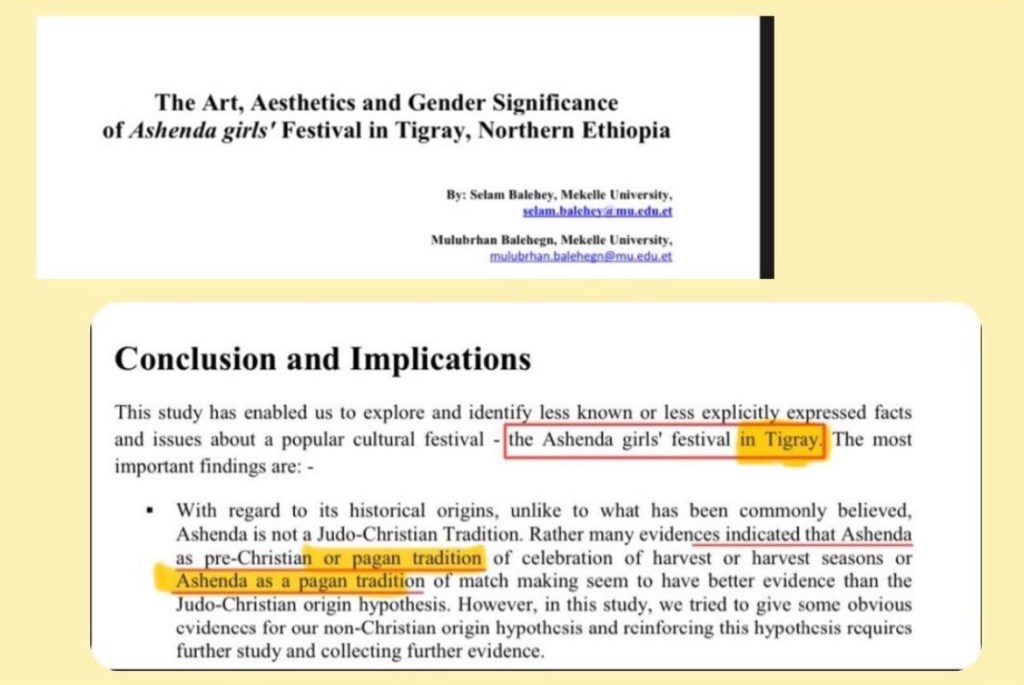
Now that we have established all the facts to prove that Ashenda is originally an Amhara festival to celebrate Virgin Mary that Tigrayans hijacked into a weird pagan festival let’s examine and debunk the fake proof that they use to claim our culture.
One of the photos Tigrayans use is this photo where they claim it’s Tigrayans celebrating Ashenda from 1910.
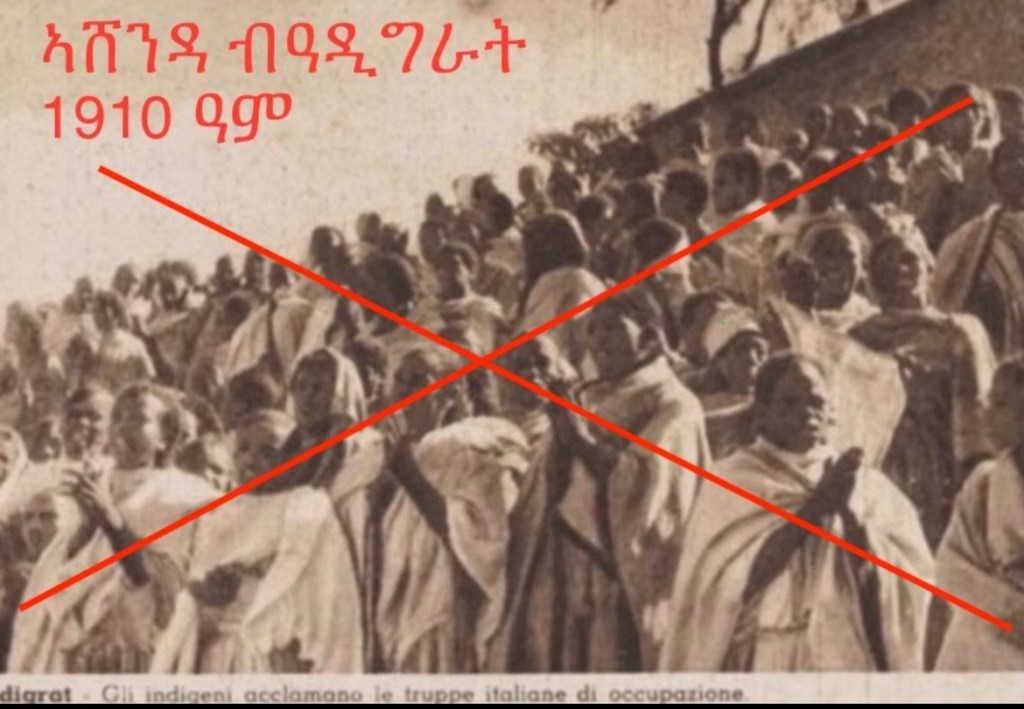
However this is false and it’s actually Tigrayans praising Italian colonial soldiers.

Another photo in Adrigat where Tigrayans will tell you they’re celebrating Ashenda below, but the ascaris (native Italian collaborators) in the back with the tall hats reveal that Tigrayans are just dancing for their Italian colonizers.

The hats in the back were usually worn by Tigrayans and Eritreans as shown below.

Another fake vintage photo shared by Tigrayans who claim this is them celebrating Ashenda however the same hats can be seen in the background.
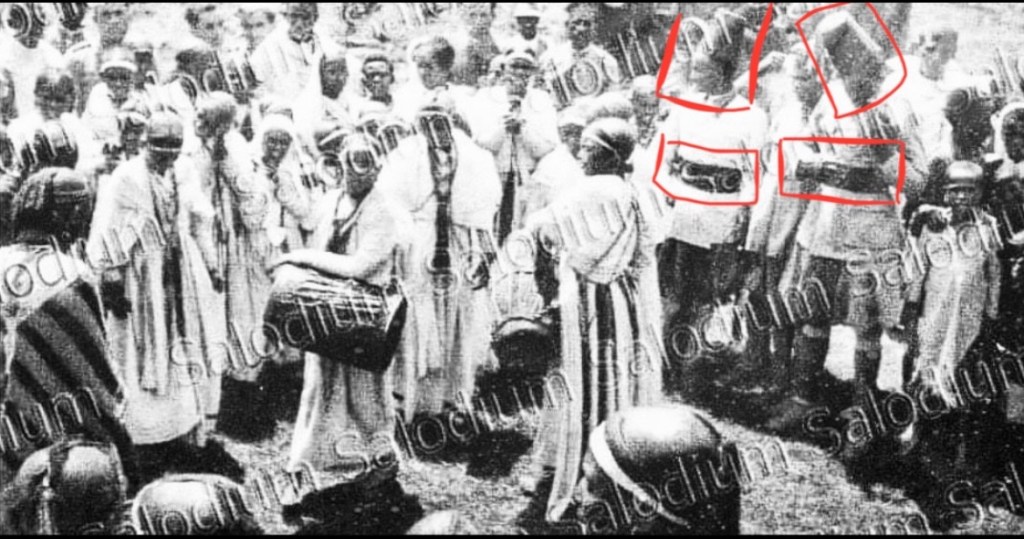
Same as above: tall hats, long sleeves & shorts for uniform, gear strapped to the waist. These are all signs of ascaris. So instead of praising Mary, Tigrayans are praising Mussolini.

Another photo where Tigrayans claim they were celebrating Ashenda in “Mekelle” in “1910.”
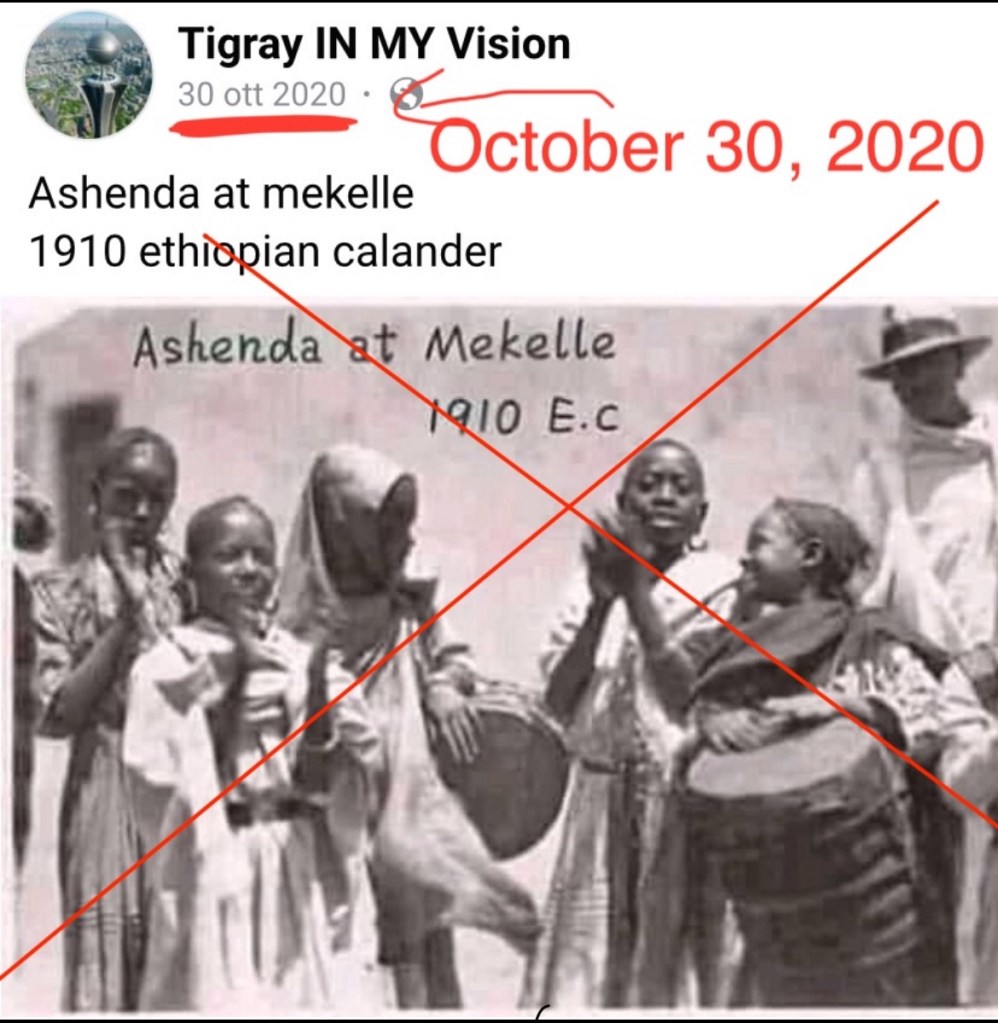
However in reality, the photo is of Eritrean kids putting on a show for Italians in Asmara, c. 1930s.

Tigrayans claim this is an Ashenda song from 1828 but there are many problems like the fact that singer is a man when it should be a woman; he’s singing about St. John, not Mary; he starts by saying “Oy Tasa” (“testing”) suggesting he’s in a studio and most embarrassing is the fact that audio testing was not a thing until 1857 at the absolute earliest.
More Tigrayan deception. They don’t even care to research the photo before posting it as theirs.
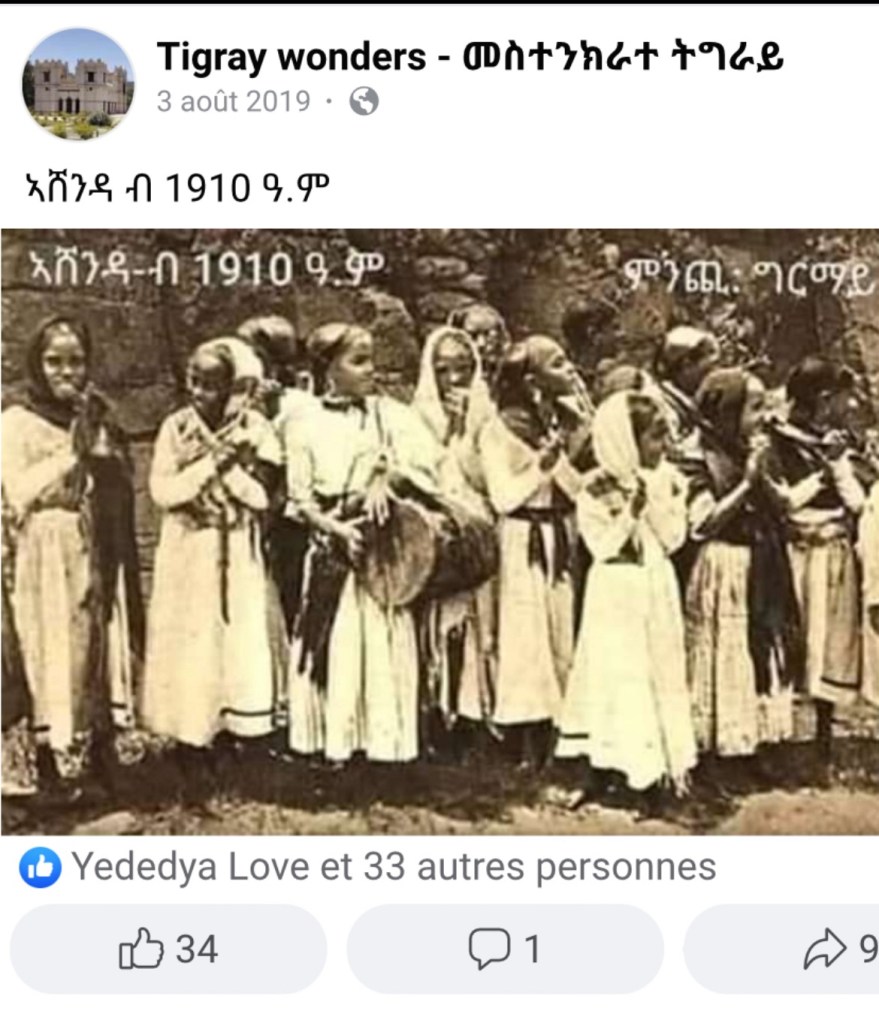
This photo is Eritrean children in Asmara put on another show for Italian officials as they cross paths. Photo from 1918.
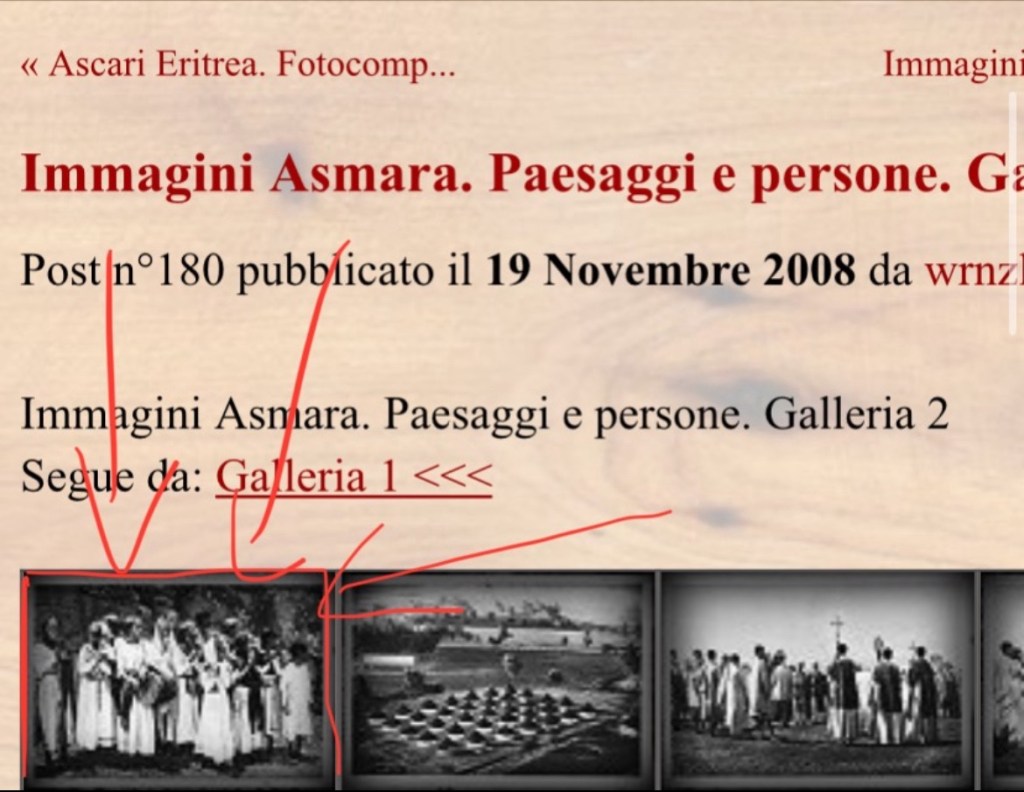

This is just a fraction of the lies they have spread nonstop for the last 3 decades to claim our culture as theirs.
Most of the so called proof for Ashenda belonging to Tigray came in the last 30 years during TPLF era. Tigrayens called and still call their celebration Ayni Wari. Unlike Amharas they don’t celebrate for religous reasons rather for unholy reasons.
The culture, name and celebration of Ashenda has always been tied to Amharas. Amharas need to reclaim their culture and stop being so nice to agames.
 Amhara Archive